Showing posts with label rv 101. Show all posts

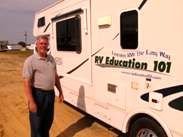
RV Driving Tips by RV Education 101®


 Visit the MBA Insurance website at http://www.mbainsurance.net/ or just call toll-free in Arizona, 800- 622- 2201.

Mark Polk with RV Education 101 offers advice on how to avoid the number 1 MBA RV insurance claim, accidents at the gas pump.

RV Driving Skills Basics 10 minute E-course:
http://shop.rveducation101.com/rv-driving-skills-basics-10-minute-e-course-p3...
Drive Your Motorhome Like a Pro Download:
http://shop.rveducation101.com/drive-your-motorhome-like-a-pro-download-p232.php

Marks RV Mailbox - RVs Sitting Idle

Question:  When we are not using our RV, this could be for several months at a time, should I start the engine every week or so?

Mark’s Answer: I always add a fuel preservative to the fuel tank when our unit will sit idle for more than a couple months at a time. I run the engine and the generator long enough for the preservative to get through the fuel system. But, I still think it’s good to start and run the engine and generator at least monthly when in storage. It allows the oil to lubricate the dry components of the engine. When you run the generator be sure and run it with at least a half rated load on and if try to run it for at least an hour. You should be able to find the load ratings in the generator owners manual.

Happy RV Learning,

Mark Polk


RVing 101 - A Cool RV Destination

Are you ready for an RV trip in 2012? Why not head to Branson Missouri. Campers rate the Branson KOA campground high in customer service, facilities and amenities.

Let’s head to Branson and see what the KOA has to offer.

The Branson KOA is located less than a mile from the entertainment strip. Have breakfast in the convention center, let the staff make your Branson show reservations, then relax in shuttles to your favorite show, shopping or dinner location. Branson is “the Show Capital of the World” featuring over 100 shows a day at 45 theatres offering every array of music and entertainment. You can find Country, Motown, Rock ‘n’ Roll, and Broadway just to name a few.

Branson Landing’s Winter Wonder Landing doesn’t end after the holiday season, as the 100 shops and restaurants and the beautiful winter décor continue to warmly welcome guests visiting Branson Landing.

Facilities at the Branson KOA include more than 150 full-hookup 50-amp sites, cable TV and Wi-Fi, and rental units featuring camping cabins, cottages, and new lodges, many with bathrooms. Enjoy air-conditioned bathrooms and remodeled laundries. This KOA has Branson’s largest group and reunion facilities. Work with the event planner for catering, entertainment and transportation needs. The KOA Café features pizza, ice cream, homemade fudge, gifts, souvenirs and a large selection of RV parts and accessories. The new location puts you in the center of all the action.

There is plenty to do in Branson regardless of the time of year you go. Start planning your trip, load up the RV and head to the Branson KOA for some great camping and attractions in 2012.


Happy RV Learning,

Mark Polk

RV Education 101
RV University
RV Orientation
Go for the RV Gold
RV Consumer

RVing 101 - Do you Grease the Wheel Bearings on your Towable RV?

Question: At what mileage or time interval should a travel trailer or 5th wheel have the wheel bearings greased?

Mark's Answer: That’s a good question. Dexter axle recommends that along with bearing adjustment the wheel bearings should be inspected and lubricated every 12 months or 12,000 miles whichever comes first. Be sure and check your RV owner’s manual because I have seen intervals of 12 months or 5,000 miles as well.


Happy RV Learning,

Mark Polk


A Fun Vintage Trailer Restoration Project with Mark Polk

What do I consider to be a vintage trailer? Well, when you talk about vintage trailers lots of folks think about trailers that were built in the 30s, 40s or 50s, or they think about a particular brand name like airstream, Spartan or Prairie Schooner. I think any trailer you find today from the 30s through the 60s are classic vintage trailers. When I started to consider a vintage trailer restoration project I wasn’t as concerned about a name or era of time as I was about a finding a trailer with a good foundation at the right price.

I think there are lots of these old vintage trailers sitting around out there that can be found and restored back to a useable condition at a fairly reasonable cost. Find an old trailer that you like the looks of, or one that has some character. If you can find an old trailer with a semi solid structure at the right price and you like the way it looks it can make a fun vintage trailer restoration project. I say go for it, you only go around once, have some fun!

Happy RV Learning,

Mark Polk


Is your RV an Orphan?

RV 101-
Question:  I’ve been trying to find information about orphan RVs and if they will be supported in some way or another. So far, I’ve come up with nothing concrete. In particular, I’m talking about Fleetwood Discovery, 2006-08 model years.

Marks Answer: An orphan RV is an RV that was built and sold and at some point after the sale the RV manufacturer went out of business , leaving the consumer with no warranty, parts or service network. Unfortunately this happened with lots of RV manufacturers across the country during the recession.

Orphan RV’s have been a problem for lots of RVers as more manufacturers have closed their doors. Fleetwood however will continue to support RV owners in warranty, parts and service. If a person owns a motorized Fleetwood product, built prior to the new Fleetwood ownership, warranty work and service work will be honored at current Fleetwood dealerships.

This isn’t to say they will all be happy to do the work (it’s sad but some dealerships don’t like to work on units they didn’t sell) but they are supposed to work on Fleetwood products. So, its safe to say there is a pretty strong network regardless of where your travels may take you.

One other thought is to consider a good service contract on the unit so it will still be covered after any factory warranty expires. Just do your home work and make sure it is a reputable company with a good network of dealers around the country who will honor the contract.

There are many orphaned RV owners who can’t get any support whatsoever and that is a sad fact, but motorized Fleetwood products do not fall into that category.

Happy RV Learning,

Mark Polk


RV Toilet Chemicals Still Have Formaldehyde...REALLY?

Question: Why do they still sell toilet chemicals with formaldehyde in them? I haven’t used them in years, but still see them on the shelves of reputable stores.

Mark Says: Some states like California have been fighting to ban using formaldehyde in holding tank chemicals. The reason manufacturer’s use it is because formaldehyde does a good job controlling odors.

I should start by addressing what many consider the problem to be with formaldehyde in holding tank chemicals. Certain chemical additives like formaldehyde can cause septic tank failures by killing the bacteria needed for a septic tank to operate properly. The way formaldehyde controls odors is by killing the bacteria that causes the odor. So it kills the bacteria in the RV holding tanks as it attempts to control odors.

When you empty your holding tank the formaldehyde also kills the bacteria used to breakdown the wastes in the septic tank. When this happens over a period of time, like at a campground the septic tank can’t operate properly and the septic system gets clogs resulting in health risks and high costs to repair the problem.

So, what can we as RVers do to help? Even though formaldehyde helps control odors you should use holding tank deodorizers that do not contain formaldehyde. Look for enzyme or citrus based products that are biodegradable for use in your RV or boat and pass the word along to other RVers..

Happy RV Learning,

Mark Polk

RV Tire Tips - How To Determine Your RV Tire Pressure

RV Tire QUESTION:
Mark, can you tell me the correct pressure that you should inflate a tire to before taking a road trip. My trailer tires say max psi 70lbs. I can't seem to get a straight answer from our local shops, and I want to make sure I don't overheat them. I do know to check them first thing before driving and before the sun hits them. Thanks for any information!

Mark's Answer:
It can be a bit confusing, but I'll try and explain. Tire manufacturers publish tire load and inflation tables for tires they manufacture. In a perfect world you would know what the actual load is being placed on the tires and could go to the load and inflation tables for precise inflation pressure.

Since we know this isn't always practical there are a couple of ways to help determine tire inflation pressure. On the front left corner of the travel trailer you will find a Federal Certification Tag or label. This label displays information on tire inflation pressure, GVWR and GAWR. The tire inflation you see on the label is based on what the trailer weighed when it was built. If no additional weight is placed on tires this inflation pressure is accurate, but we all add weight to the RV when we load it for a trip. The question is how much weight is added and the only answer to that is to have the RV weighed, preferably by individual wheel position.

The inflation pressure molded into the sidewall of the tire is the maximum amount of air pressure you would ever inflate the tire to if a full load was placed on the tire. You can find the tires max load range on the sidewall too.

What this means is, if the trailer tires are not overloaded the inflation pressure (depending on actual weights) is somewhere between what is posted on the certification label and molded in the tire sidewall. In other words in some cases it is possible to increase tire load capacity by increasing the inflation pressure in your tires, but you cannot exceed the maximum pressure specified on the sidewall of the tire. You can usually find load and inflation tables on the internet.

It’s also important that you use the same inflation pressure on both ends of each axle. If you weigh the RV and the tire loads are different on each axle end the load tables might require different inflation pressures. When this happens you need to redistribute the load. If the load can not be redistributed you would inflate both of the tires to that axle to the inflation pressure required for the tire with the heaviest load. Keep in mind that it cannot exceed the max tire pressure molded in the sidewall.

Here are a few general rules for tire inflation I like to use:

  • Never pull the trailer with tires inflated to less pressure than required for the load placed on the tires.
  •  Never pull the trailer with tires inflated to less pressure than what is on the certification tag, no matter what the load.
  •  Never inflate your tires above the maximum pressure shown on the tire sidewalls.


Happy RV Learning,
Mark Polk
RV Education 101
RV University
RV Online Training

Follow us on FACEBOOK

Copyright by Mark Polk owner of RV Education 101

Polk’s Top 7 Reasons for Using a Tire Pressure Monitoring System

I think most RV owners have heard stories about an RV that had a tire blowout at one time or another. Some of these tire blowout stories are worse than others, and hopefully if you ever experience a tire blowout it will result in little damage and no one will be hurt.


There is more educational material available now on RV tire care and maintenance than ever before. We are instructed to check and inflate our tires to the correct pressure for the load, not to overload the RV, to inspect our tires for signs of damage and/or excessive wear and to replace tires that show any evidence of damage and at regular intervals.

This is all great advice that should be adhered to, but it is impossible to know what kind of damage may have already occurred to the inside of a tire, and you have no way of knowing when the tire might fail. Another consideration is what might be happening to the tires on your tow or towed vehicle as you travel around the country. Several years ago I had a tire blowout on our towed vehicle and barely noticed it until the entire inner fender was destroyed before I could safely pull over and stop.

This brings me to the topic of today’s article, a Tire Pressure Monitoring System (TPMS). For many years I traveled in RVs without a TPMS. Looking back now I honestly can’t tell you why I didn’t get and use a TPMS sooner. During the time I didn’t use a TPMS I had one rear tire blowout and was fortunate to be traveling at a lower speed when it happened. Even at a lower speed it caused some damage to our motorhome. It wasn’t until we were planning a long RV trip that I decided it was time to look into a TPMS.

I would like to give you my top 7 reasons for using a TPMS on your RV and tow or towed vehicle tires:

1)Most Tire Pressure Monitoring Systems I researched were easy to install and easy to use.

2)It’s a quick and easy way to check the tire pressure in every tire before traveling each day. The TPMS I use is accurate to within 2.7%. That’s as accurate as many tire gauges.

3)You can monitor both the RV and the towed vehicle tires as you travel. That’s what I call piece of mind!

4)A TPMS has an alarm/warning system to notify you of a potential problem. Knowing when there is a potential problem with a tire can limit damage to the RV and quite possibly save lives.

5)My TPMS monitors tires for a loss in air pressure and for possible overheating too.

6)A TPMS can be cost effective. The cost of a decent TPMS can be equivalent to the price of a new motorhome tire, not to mention the damage a blowout can cause to the RV and/or the towed vehicle.

7)I don’t think I was ever as relaxed traveling in the RV as I am now with the TPMS onboard. Driving is much more enjoyable when you know what the tire pressure is at any given time, and the fact that you will be warned if a problem with the tires exists.

As I researched the topic I discovered many reputable companies offering a TPMS that will work on larger motorhome tires. Based on my particular needs and on what I wanted in a TPMS I decided on the Tire Minder, Model TMG 400C by Minder Research

Happy RV Learning,

Mark Polk
RV Education 101
RV University
RV Orientation
Go for the RV Gold
Follow us on FACEBOOK
RV Consumer

RV 101® - How-To Winterize your RV Water System in 7 Easy Steps

It’s always sad to come to the realization that another camping season is winding down.  Depending on where you live, part of this realization is preparing the RV for winter storage so it will be ready to go camping again next spring.  A major part of winterizing your RV is to protect the RV water system from potential damage, caused by exposure to freezing temperatures.


RV Buzz Tip: Frozen and damaged water lines are in fact the most common problem related to not winterizing your RV, or not properly winterizing your RV.


The RV plumbing system is the most vulnerable system to damage caused by plummeting temperatures. The good news is, it is easy to protect the RV water system from this potential threat.  Here are my top 7 steps to winterizing your RV plumbing system.


Before you get started there are a few items you will need to have. These items can be found in most RV parts stores:
 1) Non-toxic RV/Marine antifreeze. The amount depends on the layout and length of your plumbing lines. Two to three gallons will normally do it.
2) A water heater by-pass kit, if not already installed.
3) A wand to clean out the black water holding tank if the RV doesn’t have a built-in black tank clean-out system.
4) A water pump converter kit, or tubing to connect to the inlet side of the 12-volt water pump.
5) Basic hand tools to remove and install drain plugs.


Note: Be sure to read your RV owner’s manuals for unit specific winterizing guidelines. Follow all steps below that apply to your RV.

Step # 1:  If you have any inline water filters remove and bypass before starting. Drain the fresh water holding tank. Drain and flush the gray and black water holding tanks. If the RV doesn’t have a built in tank flushing system clean the black tank out with a tank cleaning wand. Drain the water heater. Open the pressure relief valve and remove the drain plug.


RV Buzz Caution:  Never drain the water heater when it is hot or under pressure. With no water hooked up to the RV and the water pump turned off open a hot water faucet to remove any pressure from the system. Allow the tank time to cool before draining.


Step # 2: Open all hot and cold faucets; don’t forget the toilet valve and outside shower. Locate and open the low point water drain lines. Use the water pump to help force most of the water out of the system, but turn it off as soon as the system is drained to prevent damaging the pump. Recap all drains and close all faucets.

Step # 3: By-pass the water heater. If you do not have a by-pass kit installed the water heater will fill up with RV antifreeze before it goes through the water lines, wasting six or ten gallons of antifreeze.

Step # 4: Install a water pump converter kit, or disconnect the inlet side of the water pump (the line coming from the fresh water holding tank) and connect tubing from the water pump inlet into a one gallon jug of RV antifreeze.

Step # 5: Turn the water pump on and pressurize the system. Starting with the closest faucet to the pump slowly open the hot and then cold valves until the pink colored RV antifreeze appears. Replace the antifreeze container as required. Repeat on all faucets from the closest to the farthest away. Don’t forget the outside shower.

Step # 6: Flush the toilet until antifreeze appears. Pour a cupful of antifreeze down each drain. Pour some RV antifreeze in the toilet and flush into the holding tank to prevent any water in the tank from freezing. If your water heater has an electric heating element, turn it off. This will protect the element if the unit is plugged in while in storage. Make sure all faucets are closed.

Step # 7: Consult your owner manuals for winterizing icemakers and washing machines.

The unit is winterized. Now, next spring when it’s time to head out in the RV you won’t have any unpleasant, not to mention costly, surprises waiting for.

For more information on this topic check out our Winterizing & Storing your RV

Copyright ©️ by Mark Polk
Happy RV Learning,

Mark Polk
RV Education 101
RV University
RV Orientation
Go for the RV Gold
Follow us on FACEBOOK
RV Consumer

RV Poll Results (3rd Installment)

It’s always interesting and fun to look back at some of our past RV polls to see how folks responded to the questions.

Keep in mind that the outcome of any poll depends on several factors like; what type of poll it is, how the questions are worded, who is asking the questions and of course who does and does not participate in the poll. Our weekly RV poll is not a scientific poll, a political poll or a marketing poll. It is basically used to give me some idea of what our newsletter readers are interested in, how they use their RVs, and of course just for fun.

Here are the latest RV poll results:

Poll Question: Do you use the shower at the campground bath-house more than the shower in your RV?
Poll Response: 41% answered yes and 59% answered no.

Poll Question: Do you RV during the fall and winter months?
Poll Response: 84% do and 16% do not.

Poll Question: Do you winterize your RV, or do you have an RV dealer winterize it for you?
Poll Response: 88% winterize their own RV and 12% do not.

Poll Question: Do you take bottled water with you when RVing, or do you filter your drinking water?
Poll Response: 32% take bottled water, 15% filter their water and 53% do both.

Poll Question: Do you store your RV on your property or at a storage facility?
Poll Response: 70% store it on their property and 30% store it at a storage facility.

Poll Question: Do you RV with pets?
Poll Response: 91% do and 9% do not.

Poll Question: How often do you wash your RV?
Poll Response: 29% after each trip, 7% before putting in storage, 3% never and 61% as needed

Poll Question: Do you pack most of your food before leaving on a trip or buy your groceries when you arrive at your destination?
Poll Response: 72% pack most food before leaving and 28% buy food when they get there.

Poll Question: Have you ever weighed your RV?
Poll Response: 36% have and 64% have not.

Poll Question: How many years has your RV battery(s) lasted? (1 to 2, 2 to 3, 4 or more)
Poll Response: 15% 1 to 2 years, 39% 2 to 3 years and 46% 4 0r more years.

Poll Question: Do you perform your own routine maintenance on your RV?
Poll Response: 78% yes and 22% no.

Poll Question: Have you ever cleaned your RV roof?
Poll Results: 84% have and 16% have not.

Poll Question: Have you ever dry-camped in your RV? (camping without hookups)
Poll Response: 73% answered yes and 27% answered no

Poll Question: Have you ever camped in a national or state park?
Poll Response: 80% have and 20% have not

Poll Question: Have you ever had a rodent problem with your RV?
Poll Response: 30% answered yes and 70% answered no.

Poll Question: Have you ever spent the night in a Wal-Mart parking lot?
Poll Response: 48% have and 52% have not.

Poll Question: When traveling by RV how often do you connect to the Internet? (every day, 2 or more times a week)
Poll Response: 69% responded every day and 31% responded 2 or more times a week

Poll Question: Who drives or tows the RV the most? (male, female, I travel alone)
Poll Response: 92% male, 4% female, 4% I travel alone

Poll Question: Did your RV come with a spare tire?
Poll Response: 73% yes and 27% no

Poll Question: Do you make advanced campground reservations?
Poll Response: 84% yes and 16% no.

Poll Question: Do you see closing state parks as a feasible method to decrease state budgets?
Poll Response: 10% said yes and 90% said no.

Poll Question: Is your RV financed?
Poll Response: 56% yes and 44% no

Poll Question: Do you have an RV Emergency Roadside Service Plan?
Poll Response: 84% do and 16% do not

Poll Question: On average, how many miles a day do you travel in, or tow your RV? (200 or less, 300, 400, 500 or more)
Poll Response: 18% 200 or less, 46% 300 miles, 27% 400 miles and 9% 500 or more.

Happy RV Learning,

Mark Polk
RV Education 101
RV University
RV Orientation
Go for the RV Gold
Follow us on FACEBOOK
RV Consumer

Pre-winter RV Checks for the RV Consumer

As we head toward colder temperatures, I would like to suggest a few preventive maintenance checks to prepare your RV for the fall and winter camping seasons. Please don’t confuse these checks with winterizing your RV or preparing it for winter storage.

In no particular order, here are my top 7 pre-winter RV checks:
1. Inspect your RV batteries

Check all battery connections for secure mounting. Clean the batteries with a 50/50 mixture of baking soda and water, if necessary. If you have lead-acid batteries, check the electrolyte level in each cell and add distilled water, if necessary. Many older converter chargers provide a constant charge of approximately 13.5 volts, which is too high for fully-charged batteries and can cause the electrolyte to boiled off, resulting in an early death for the batteries.

Check water levels weekly, at a minimum, when using the RV. Test the battery state-of-charge and charge any batteries that are at or below 80 percent. A discharged or partially-charged battery will freeze much faster than a fully-charged battery. Use a digital voltmeter to measure voltage and get a quick picture of the batteries’ depth of discharge. If you don’t feel comfortable working on or around batteries, have a reputable RV service center perform battery maintenance for you.

Note: A 12-volt battery that is charged should read 12.5 to 12.7 volts. Readings less than 12.5 indicate the battery state of charge is below 80 percent and the battery needs to be charged. A 6-volt battery that is charged should read 6.25 to 6.37 volts. Readings below 6.25 indicate the battery state of charge is below 80 percent and the battery needs to be charged.

2. Test automotive antifreeze

The antifreeze in your tow vehicle or motorhome radiator should always have a 50- to 70-percent concentration of antifreeze to water. Water does a good job helping to cool an engine but it freezes quickly during cold winter temperatures. Water can also cause certain metals to rust and corrode over time. The proper concentration of antifreeze is necessary to provide freeze protection and chemical protection against corrosion.

To test the antifreeze, use quality test strips, a float-type hydrometer or a refractometer. A refractometer is the most accurate testing device.

Inspect all coolant hoses for signs of damage or leaks. Coolant hoses deteriorate from the inside out. Inspect all hoses for wear, cracks, soft spots, brittle areas and leaks. Inspect hose clamps for secure mounting and replace any damaged coolant hoses or clamps as required

3. Use a fuel stabilizer product like STA-BIL

Fuel stabilizers provide excellent protection against stale fuel during periods of storage. They contain corrosion inhibitors, remove water and help to clean fuel injectors. There are fuel stabilizers designed for use with gasoline and diesel engines. I use a fuel stabilizer in gas-powered lawn equipment, ATVs, boats, motorcycles and RVs.

4. Furnace checkup

One LP-gas appliance that gets overlooked during warm weather is the forced-air furnace. Most service requirements for the furnace need to be accomplished by a reputable RV service center, but there are a few things the owner can do to prepare the furnace for cold-weather operation.

The battery plays an important role in the proper operation of the furnace. Keeping lead-acid batteries watered and fully charged will prevent many furnace-related problems. Inspect furnace ducting that is above floor level for damage, such as crushed ducting or obstructions that could affect furnace operation. Make sure the furnace air return is not blocked or restricted. Test the operation of the furnace before the day arrives when you actually need it. Have a certified technician test your LP-gas system annually for proper appliance operating pressure and leaks.

5. Inspect all safety devices and replace all dry-cell batteries

Carbon monoxide is deadly. Test the CO detector, LP-gas leak detector and smoke alarm for proper operation every time you use your RV. Instruct individuals on symptoms and what to do if they are exposed to carbon monoxide or if they hear LP-gas leak detector alarms. Replace all dry-cell batteries when you change the settings on your clocks in the spring and fall. Make sure you have a charged fire extinguisher on hand and that you and other adults know how to operate it.

6. Clean, inspect and reseal your roof as necessary

Not that this is directly related to fall or winter use, but I like to inspect the roof twice a year, at a minimum, and I think spring and fall are good times of the year to make these checks.

Note: Exercise caution any time you work on the roof of your motorhome. The roof surface can be slippery and a fall can result in serious injury, or worse.

Clean your roof with an approved cleaner for the type of roofing material your motorhome has. Every time you clean the roof, inspect the sealants around all of the openings and the seams on the roof. Water will take the path of least resistance, and if there is the smallest opening, it will find it. Thoroughly inspect the roof sealants for potential leaks and reseal any areas of the roof seams and around openings where you suspect a leak. Make sure you use sealants compatible with your roofing material. Keep in mind that your warranty can be voided if you fail to perform some of these required inspections. Check your motorhome owner’s manual for roof inspection intervals.

7. Plan for non-use

If you don’t plan to use your RV over the fall and winter months, winterize the plumbing system to prevent freezing. Prepare all other systems for short or long-term storage.

Check out our Winterizing & Storing DVD
Winterizing & Storing E-book

Happy RV Learning,

Mark Polk
RV Education 101
RV University
RV Orientation
Go for the RV Gold
Follow us on FACEBOOK
RV Consumer

RV 101- RV Education 101 Tips for Improving Fuel Economy for the RV Consumer

Mark Polk, founder of RV Education 101 stated, “If there were 7 easy steps you could take to improve fuel economy in your RV and automobiles would you do it? Of course you would! So here they are:”


1) Check and replace your air filter if it’s dirty. A clean air filter can improve your fuel economy up to 10%.

2) Check and adjust your tire pressure to the proper pressure for the load. This alone can increase fuel economy by 3%, not to mention preventing premature tire wear and failures caused by over or under-inflated tires. Tires can look normal when they are seriously under-inflated. Use a quality air pressure gauge and check your tires when they are cold, before traveling more than one mile.

3) For every 5mph you travel over 60mph is equivalent to paying ten cents more per gallon at the pump. If you are traveling down the Interstate at 70 mph add twenty cents to the price at the pump! Speeding and rapid acceleration reduces fuel economy anywhere from 5 to 33% depending on your individual driving habits.

4) Keep your vehicles tuned up and in top running condition. A poorly tuned engine can lower fuel economy by 10 to 20%. Poor emissions and/or a faulty oxygen sensor can cause up to 40% reduction in fuel economy.

5) Following recommended service and maintenance schedules/intervals will save a significant amount of fuel.

6) Using synthetic oils can increase fuel economy by 2%.

7) Adding weight that you don’t need reduces fuel economy significantly. A friend once told me, if you haven’t used it in the last 6 months you don’t need it!

See, it really is easy to improve our fuel economy. Try following these 7 easy steps to improve your fuel economy. You, and your wallet, will be glad you did.

For more RV 101 educational information visit http://www.rveducation101.com/ and http://www.rvconsumer.com/

RV Education 101: The Largest Online Digital RV Training Provider

RV Education 101: The Largest Online Digital RV Training Provider

Learning RVs the Easy Way by RV E-Learning

Your premier online source for RV education! Mark Polk, the RV Savvy Guy and founder of RV Ed 101,
is recognized as THE foremost authority on professional RV training material. Mark will walk you through a comprehensive selection of online training programs that will simplify your personal RV training needs.

RV information where you want it, when you want it! It’s as easy as…


  http://goforthervgold.com/
Go For The RV Gold

  • Comprehensive self-paced RV training
  • Over 45 RV videos, 50 RV articles & more…
  • No driving, no crowded classrooms, no time restraints


 http://rvorientation.com/ 
The RV Walk Through Orientation


  • In depth RV walk through training video
  • Watch as often as you want or need
  • Essential for new purchasers 


http://rvvideosondemand.com/
RV Videos on Demand

  • Instant training on specific RV topics
  • Short, concise and to the point
  • Affordable RV training on demand!


http://rvdownloads.com/
RV Video Downloads
  • Full length feature RV training downloads
  • No shipping. No waiting. Save money.
  • Instantly download to your computer


    http://rveducation101.com/ebooks.htm?siteID=0
RV Education 101 E-book Library


  • Instant RV information at affordable prices
  • Comprehensive, in-depth or specific; you choose your RV topic
  •    
     http://rvvideosondemand.com/?page_id=307
    Mark’s RV Garage Internet TV Series
    • Telly Award Winning RV entertainment
    • Each episode of this hit series provides valuable RV information!

    Profit from RV Ownership /An Interview with Bert Alanko of MBA Insurance

    When I meet a new or potential RVer, one recommendation I make is for them to rent an RV before they purchase one. Renting an RV lets the consumer experience RVing firsthand and can be helpful in determining if RV ownership is right for them.

    Something I never really considered though was producing additional income by renting your RV after you buy it. That was until the other day when I was talking to Bert Alanko, President of MBA Insurance. Bert explained that RV rentals by owners are growing in popularity, especially during tough economic times. And, you not only get to enjoy the benefits of using your RV whenever you like, but you can produce additional income when it would normally be sitting in storage.

    Bert said, “RV rental can be true entrepreneurship. Someone can start with one vehicle and stay small, renting out their vehicle. Or as has happened, start with one vehicle and end up being a full scale dealership with sales, service, rentals, a showroom and a complete service center.”

    The thought of making additional income by renting the RV piqued my interest, so I started with the questions:

    Q1: Do you provide rental insurance for individually owned RV’s?
    Bert Alanko: Yes, we insure small, one unit, rental business to the larger 500 vehicle fleets.


    Q2: What do you base the rates on for individually owned RV’s?
    Bert Alanko: Our rates are based on the vehicle’s value and the geographical location of the RV. We write insurance in every state. MBA will provide an individual with the rental insurance necessary to cover the vehicle, the owner and the renter. It is very important if you are going to rent out your vehicle that you obtain the proper insurance coverage.

    Q3: How would an individual learn what is required to properly rent their RV out?
    Bert Alanko: We can provide the owner with state specific rental contracts, the check-in and check-out forms, and all the necessary forms that one has to have to start the business from the rental standpoint. They would need to contact local officials about any requirements from a business standpoint.

    Q4: Is it difficult for an RV owner to learn and operate a small rental operation?
    Bert Alanko: Not in my opinion. We also offer a Rental Operation Manual. This manual is a how-to book providing tips and suggestions that we have learned and are taught in our RV rental school. Yes, MBA puts on an annual RV rental school. This year will be our 12th annual rental school. It is taught by dealers who are currently in the RV rental business, and it’s a great way to learn the business.

    Q5: Now for the big question! Is renting an RV profitable for an individual?
    Bert Alanko: Renting an RV can be very profitable. Lots of folks make their monthly RV payment from income generated through renting their RV. I look at it like this; your RV isn’t making any money when it sits in storage, so why not put it to work for you.

    Q6: Is there anything else you can add about renting an RV for an additional source of income?
    Bert Alanko: MBA takes pride in not only selling the insurance – that is easy, but our specialty is providing the necessary information to our customers so they can make rentals profitable. Our insurance policy can be seasonal. One does not have to commit to a full year at a time. We have a wide range of programs to suit the needs of owners that are going to commit to rental on a long or short term basis.

    Q7: Thanks for all of this great information Bert. Where can RV owners go for more information about renting their RV?
    Bert Alanko: They can visit our website at http://www.mbainsurance.net/ or just call us toll-free in Arizona, 800- 622- 2201.

    So there you have it. If you would like to try your hand at renting your RV when you aren’t using it contact the folks at MBA insurance for more information.

    Take a minute to check out our brand new RV Consumer website at and be sure to register for our totally free RV Safety E-course while you are there.

    Happy RV Learning,

    Mark Polk
    RV Education 101
    RV University
    RV Orientation
    Go for the RV Gold
    Follow us on FACEBOOK
    RV Consumer
    RV Videos on Demand

    RV Education 101 Announces Launch of New RV Consumer Site

    Harrells, NC – December 2010 -- RV Education 101, founded in 1999, announced the launch of a new RV consumer training site today. The URL is http://www.rvconsumer.com/. Mark Polk, founder and co-owner of RV Education 101 said, “We have worked on this RV consumer site for several months now, and are extremely excited to finally launch it.


    Tagged as “The Ultimate RV Education Center” Polk says, “This site is a culmination of all of our RV training efforts over the past decade, and is a one stop RV training site for the entire RV consumer’s training needs. One day I realized that if I consolidated all of our RV training material into one RV training site, it would in fact be the premier RV education center.”

    The RV training material Polk is referring to is his 18-RV instructional DVD’s, 13-published RV E-books, 3-published RV books, 4-RV online training programs, hundreds of published RV articles, RV product installation videos and RV product reviews.

    Dawn Polk, co-owner and marketing director, said, “Our thought behind this new site was to organize the vast field of RV’s and RVing into six major categories and offer the RV consumer invaluable information in each of these areas. The six categories are: RV consumer training, RV consumer buying, RV consumer safety, RV consumer products, RV consumer articles and advice and last but certainly not least, enjoying your RV. To help promote our new site and to introduce our RV videos on demand online training program we are offering a free RV safety e-course to anybody that would like to take it. You can visit www.rvconsumer.com for more details on the free RV safety e-course.

    Polk’s other RV educational sites are http://www.rveducation101.com/ and http://www.rvuniversity.com/.  The primary focus of these RV training sites has been to educate RV owners on how to properly and safely use and maintain their RV, using visual and written training materials. RV Education 101 has helped educate more than a quarter of a million RV enthusiasts over the past decade.

    For more information on these RV educational sites visit www.rvconsumer.com, http://www.rveducation101.com/
     and http://www.rvuniversity.com/
                                                                                             xxx

    RVIA Trade Show in Louisiville 2010 Part 5

    If you own a Type A motorhome that was built on an F-53 Ford chassis this picture gives you an idea of what the chassis looks like before they start to manufacture the motorhome.


    This is what a Ford cutaway chassis looks like before they build a Type C motorhome on top of it.


    This is an interesting picture of the direction some hybrid trailers are going. Notice the extended bunk end on the side of the trailer as opposed to being in the front or rear of the trailer. Manufactured by Livin Lite.


    Slide-outs, slide-outs and more slide-outs. RV manufacturers, like this Fleetwood motorhome, keep finding new places to put slide-outs and we enjoy the added space they provide us.


    Happy RV Learning,

    Mark Polk
    RV Education 101
    RV University
    RV Orientation
    Go for the RV Gold
    Follow us on FACEBOOK
    RV Consumer

    RV Videos on Demand

    RVIA Trade Show in Louisiville 2010 Part 4

    Now that's a big front window. Be careful walking around inside when you get out of the shower! After further examination it did have a screen you could pull down.


    Here is a toy hauler with a comfortable rear living room. Don't forget to move the recliners and roll up the carpet before you pull the motorcycles or ATVs back in.


    This was a retro style Type A motorhome called the "Trip" that I saw at the Holiday Rambler display.


    One feature I was glad to see on some of the towables at the RVIA show was a wider stance axle, intended to help with trailer sway. Any improvement in the area of safety is great news for the consumer.


    Take a good look at what we know of today as a good tow vehicle. If things keep going the way they are these trucks may soon be a thing of the past! It will be like a phone booth when the next generation youth asks what that was the young parent will reply I think they called that a truck.


    Happy RV Learning,

    Mark Polk
    RV Education 101
    RV University
    RV Orientation
    Go for the RV Gold
    Follow us on FACEBOOK
    RV Consumer
    RV Videos on Demand

    More on Basic RV Electricity

    I received quite a few questions and comments on last month’s article, “Basic RV Electricity.” The questions and comments were very good and they addressed some RV electrical concerns I didn’t cover in the article. I thought that everyone could benefit from this information and decided to include it this month.

    Question: “What is a deep cycle battery?”

    Answer: RVs come equipped with deep cycle batteries for the coach. Most RVs come with a single Group 24 deep cycle battery. Deep cycle batteries are rated in amp/hours. How many amps the battery can deliver for how many hours before the battery is discharged. Deep cycle batteries are designed to be discharged over and over again and still take a charge. If you enjoy dry camping (without hook-ups) you depend on your deep cycle battery(s) to take care of your 12-volt needs. You can purchase a deep cycle battery with a higher amp/hour capacity that will last longer. The higher the amp/hour capacity is the larger the battery is. If you have room for a larger battery and enjoy dry camping you may want to consider a Group 27 or Group 31 deep cycle battery.

    Comment: “You did not cover inverters. I installed one in my motorhome because there are times when you want a little power for the TV or VCR and don’t want to crank the generator.”

    Reply: You are absolutely right. Inverters are nice to have at times when you are dry camping and/or when you don’t have access to 120-volts AC. Batteries produce power in Direct Current (DC) that run at low voltages. Power companies and AC generators produce sine wave Alternating Current (AC), which is used to operate 120-volt appliances and electronic equipment. An inverter takes 12-volt DC power from your RV batteries and electronically changes it to 120-volt AC. Some RVers use an inverter just to watch TV or for their personal computer. Other RVers use an inverter to operate microwaves, coffee pots or other larger appliances. When you purchase an inverter the inverter’s output capacity must be capable of operating the loads that will be placed on it.

    Inverters have two different capacity ratings. Continuous output rating and surge capacity rating. Continuous output is the maximum wattage the inverter can output for a long time period. Surge capacity is the maximum wattage the inverter can output during initial start up. All appliances require more power when they start, compared to what they use when they are running. They can use as much as two or three times the amount to start then what they use to run, so the starting power required for any appliance that you plan to use with the inverter must be within the surge capacity rating. There are modified sine wave inverters and true sine wave inverters. A true sine wave inverter is more expensive, but they are capable of producing power as good as the power company and all appliances and electronic equipment will run as they are intended to. Keep in mind you are drawing the power from your RV batteries and any power used has to be put back in through some type of effective charging system.

    Comment: This is a second comment from the same reader. “You need to tell your reader’s what to do when you only have 15 amps to plug in to, (usually at someone’s home and using the plug on their front porch) and you need the air conditioner.”

    Reply: I personally don’t recommend doing this, but I agree that it is possible, like you say to use the A/C if you are plugged in to a 15-amp outlet. If you do, you must exercise caution. When the A/C compressor engages it requires more amps (about 13) than it does once it is running. Because of this you need to turn all appliances off before starting the A/C, to include switching the refrigerator from A/C to LP gas. Once it is running it may be possible to use a small appliance or electronic equipment that operates on low amperage, like a TV, but you need to monitor the voltage to prevent damaging any appliances or electronic equipment.

    Comment: This is the third comment from the same reader. “You should also tell your reader’s that if they are using a long extension cord it must be #12 wire or lower, (heavier gauge) to keep the amount of voltage drop from causing problems.”

    Reply: You’re right again. If it is possible you should try to avoid using an extension cord when making electrical connections at the campground. The gauges of the wire used in standard household extension cords are not suitable for RV electrical hook-ups. Eventually you will be put in a situation where you will need to use an extension cord. It is a good idea to purchase an RV extension cord that is compatible to the electrical system of your RV, and have it on hand. If you do purchase an extension cord somewhere else I recommend 10-guage wire and use as short of a cord as possible.

    Question: “Will it hurt to leave the RV plugged in and the refrigerator on all of the time?”

    Answer: I leave my refrigerator on almost all of the time. The RV should be on level ground so the refrigerator operates properly and you will need to monitor it for when it needs to be defrosted. The only other concern with leaving the RV plugged in, not related to the refrigerator, is the coach battery. Whenever the RV is plugged in the coach battery is being charged. It's really just a trickle charge, but over time it can deplete the electrolyte levels in the battery cells. You need to check, or have somebody check the battery at least monthly when the RV is plugged in during storage.

    Question: “Is there any danger of damaging your system if you plug a 30-amp system into a 50-amp service using the proper adapter?”

    Answer: This is a controversial subject. Some people will argue that if they make an electrical adapter for it than it is safe. Others will argue that it is not safe to use a 50-amp service for a system designed for 30-amps or a 20-amp service for a 30-amp system. Electrical adapters are a necessity for RVers. Eventually you will be in a situation where you have to use some type of electrical adapter to make a connection at a campground. It may be an outdated campground or isolated area that only provides 15 or 20-amp electrical service, or the only site available is a 50-amp service for your 30-amp system. There are adapters that will go from your RV type plug and size down to household type outlets and adapters that go from household type outlets to all types of campground RV connections. It’s nice to have these adapters on hand when you need them, but you must exercise caution and use common sense when you use them. If you have a 30-amp system and you have to use a 50-amp service use your RV electrical system exactly the same way you do when you’re plugged into a 30-amp service. In other words don’t try to run anymore than you normally would. On the other hand if your RV is a 30-amp or 50-amp system and you use an adapter to plug the RV into a 15 or 20-amp outlet you severely limit what you can operate in the RV. In this situation you should only use what appliances or electronic equipment are absolutely necessary. If you place too much of a demand on electrical adapters, or use them for extended periods of time they can overheat and melt resulting in damage to the RV power cord or the electrical system.

    Question: “Sometimes the coach battery in our motorhome won’t start the generator and other times it will. My question is why isn’t the RV battery charger keeping my battery charged when I leave it plugged in all the time?”

    Answer: The battery charger in the RV converter provides a trickle charge and is only designed to keep the coach battery(s) topped off. It is not designed or capable of recharging a battery that is completely discharged or damaged. The automotive alternator also charges the coach battery when you are driving the RV. I would guess that the alternator is probably charging the battery enough to start the generator sometimes after driving for a while, but the RV battery charger can’t charge it enough to start the generator when it’s plugged in. The constant charging from leaving it plugged in all the time can deplete the electrolyte level in the battery(s) cells. Depending on how often the battery(s) is being charged will determine how often it needs to be checked. You should check the battery(s) at least monthly and if you use the RV on a regular basis and / or you leave it plugged in when you’re not using it you may need to check the battery(s) more often.

    I hope these reader’s questions and comments are helpful to you and quite possibly might answer some questions that you had about basic RV electricity.

    Happy RV Learning,

    Mark Polk
    RV Education 101
    RV University
    RV Orientation
    Go for the RV Gold
    Follow us on FACEBOOK
    RV Consumer
    RV Videos on Demand

    Finally a Towing Standard on the Horizon!

    What is J2807 and why is it important? If you haven’t heard, SAE J2807 is a standard that will be used to determine the trailer weight rating of all tow vehicles.


    I don’t always agree with mandated standards, government or otherwise, but there is one standard looming out there that I am highly in favor of.

    That standard is called “Performance Requirements for Determining Tow Vehicle Gross Combination Weight Ratings and Trailer Weight Ratings,” or in shorter terms Society of Engineers (SAE) standard J2807.

    I do have to applaud manufacturers for getting behind and supporting a standard for measuring tow ratings for vehicles.

    I have always had a problem with vehicle manufacturer published tow ratings, and even more so in the truck wars of recent years. When a ½ truck is rated to tow more than its bigger ¾ ton brothers I start to see red flags popping up everywhere. To bring you up to speed on this topic take a minute to read my first article titled “let’s Talk 1/2 Ton Trucks” that I wrote in 2007, and my follow-up article “2010 Let’s Talk 1/2 ton Trucks” which I wrote a couple of years later.

    In my humble opinion the towing truck wars have always been based on bragging rights. My truck can tow more than your truck. And in reality the method for determining those bragging rights was left up to the guy who was doing the bragging.

    The reason for some of these unrealistic tow capacities, at least the way I see it, was until now vehicle manufacturers had free reign to test and determine a vehicles tow capacity based on its own criteria. If somebody tells you to perform your own testing and publish the results the tendency is to test in a direction favorable to the design of the said vehicle you are testing. Therefore “my truck can tow more than your truck!”

    On the other hand if you test against a specific standard you get results based on that standard, not just on some of the design elements built into the product being tested. In other words you get actual results and there is no bully on the block boasting I can tow more than you can. Now we know the real deal and the consumer wins in the end because you have a standard to compare and measure vehicles against.

    This new standard will measure a vehicles towing performance based on several criteria using a standard test trailer. These criteria are:

    1) Maintaining speed on a specified grade

    2) Timed acceleration on level terrain

    3) Timed acceleration up a 12% grade

    4) Response to trailer sway

    5) Braking characteristics at Gross Combined Weight Rating (GCW)

    6) Hitch receiver structure and strength

    To give you an example of what occurs when you apply these new standards Toyota put its 2011 Tundra through the paces. The results were towing capacities dropping 400lbs, 500lbs and 1,100lbs for various models of the Tundra, over previously published capacities.

    I think it is notable for Toyota to step up to the plate and certify the Tundra against the new standards. It looks as though all of the other manufacturers are going to follow suit for model year 2013, including Chrysler, GM, Ford and Honda, and many trailer and hitch manufacturers as well.

    It will be interesting to see what happens to tow capacities when J2807 is implemented across the board. I would venture to say that many other ½ ton tow ratings and Gross Combined Weight Ratings (GCWR) will be lowered, but hey we’ll just have to wait and see.

    This J2807standard may not answer all of the questions we have or provide all of the information we want, but it’s long overdue that a standard be established for something as important as determining tow ratings.

    Now maybe the consumer will have some reliable information to base a decision on when deciding which vehicle can safely tow the load! It sure beats the “my truck can tow more than your truck” mentality.

    Happy RV Learning,

    Mark Polk
    RV Education 101
    RV University
    RV Orientation
    Go for the RV Gold
    Follow us on FACEBOOK
    RV Consumer
    RV Videos on Demand